

The Gulag: Prison
“Now we should begin the chapter on the conflict between the soul and the bars." (Part 2)

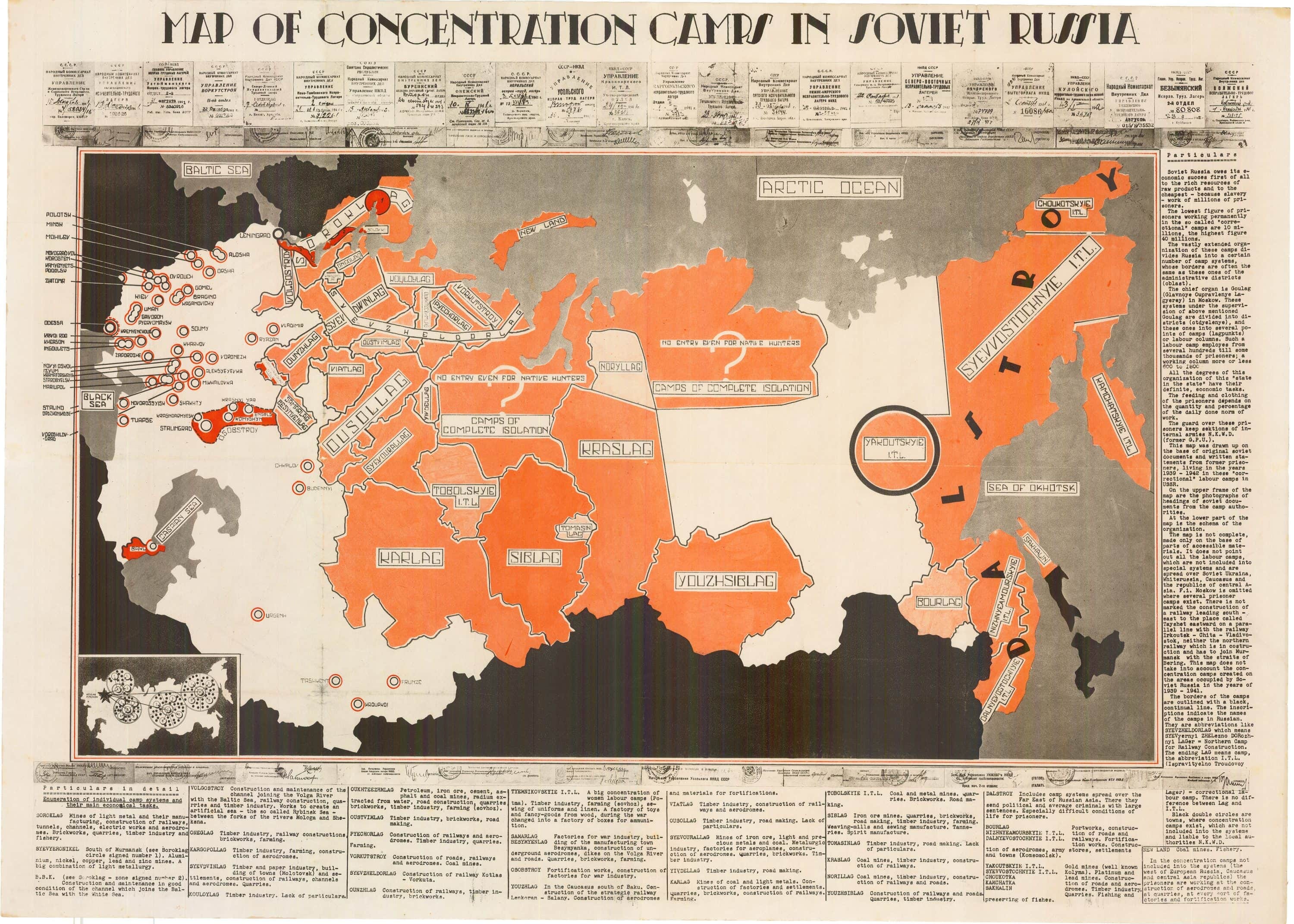
Catch up on the rest of the series:
An Introduction to the Horrors of the Soviet Gulag

“One word of truth shall outweigh the whole world.”
The Gulag: Arrest

“How do people get to this clandestine Archipelago? … Those who, like you and me, dear reader, go there to die, must get there solely and compulsorily via arrest.” (Part 1)
Introduction
“At the very threshold [of the prison], you must say to yourself: ‘My life is over, a little early to be sure, but there’s nothing to be done about it. I shall never return to freedom. I am condemned to die – now or a little later … from today on, my body is useless and alien to me. Only my spirit and my conscience remain precious and important to me.’” (Alexander Solzhenitsyn, The Gulag Archipelago)
You have now been arrested. Do not bother inquiring about the reason. You will learn all about the charges — fabricated, of course — against you when you begin your interrogation.
Your cell is five by six and a half feet. There are no windows. The light above you will burn day and night. It is best to get comfortable. Who knows how long you will be here.
*
Lubyanka. Lefortovo. Butyrka. Sukhanovka. These names were enough to strike fear through the heart of any Russian — they were the worst prisons of the Soviet Union. Sukhanovka, for example, was infamous for its torture:
“You’d not be able to question those who had been there: either they were insane and talking only disconnected nonsense, or they were dead.” (Solzhenitsyn)
After arrest, you would be taken to prison. Here, you would learn of the charges brought against you and undergo interrogation with the goal of producing a signed confession.
Solzhenitsyn describes the reality for many:
“Neither our education, nor our upbringing, nor our experience prepares us in the slightest for the greatest trial of our lives: being arrested for nothing and interrogated about nothing.”
As historian Anne Applebaum notes in her epic Gulag: A History, the “point” of arrest was to feed the frenzied demand for confessions. Stalin would frequently issue arrest quotas,1 leaving officials with the role of gathering innocents to fulfill government demands.
Prisoners could be held for days, months, or years, undergoing multiple interrogations and torturous prison conditions.
This was not even technically the Gulag. It was merely a holding point until prisoners could be transported to the camps. Prison was their first psychological test.
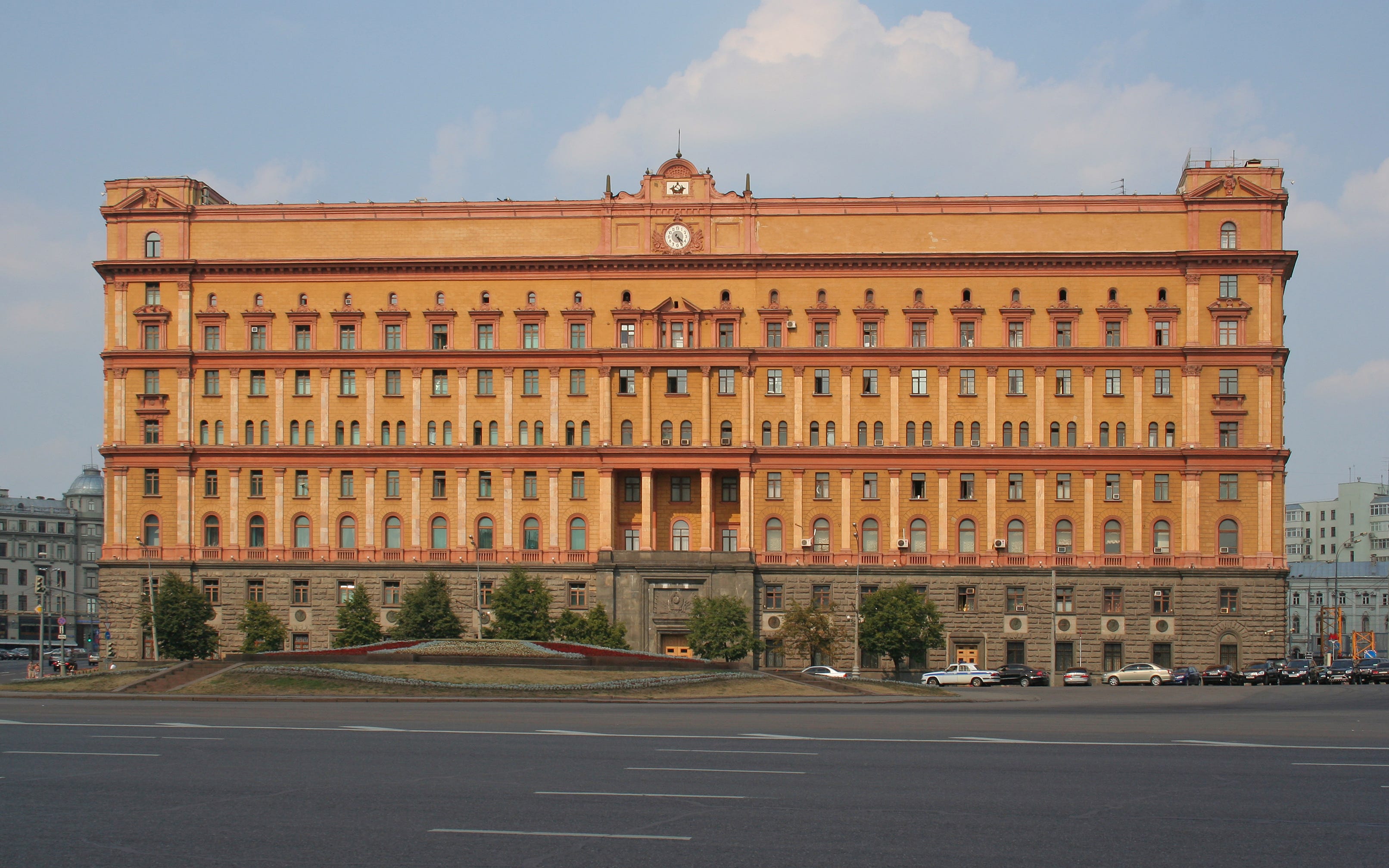
Arrest & Arrival
Prison afforded government officials time to compile “evidence” for crimes. They promised, “Just give us a person — and we’ll create the case!”
Oftentimes, prisoners were unaware that the so-called crimes they committed were actual crimes. Most of the convictions were for everyday violations of the Soviet social order. Law codes were unavailable for dissection by the public. Solzhenitsyn fumes,
“Nowhere – neither in the ‘cultural education’ sections of the camps, nor in district libraries, not even in medium-sized cities, have I seen with my own eyes, held in my own hands, been able to buy, obtain, or even ask for the Code of Soviet law!”
Only 35 years after the codes were created (and on the verge of being replaced by new ones) was Solzhenitsyn able to read them.
These were charges that neither prisoner nor guard fully understood. But confessions had to be signed. Since many were unwilling to admit to crimes they knew were false — and would result in sentencing to Gulag camps — there was a necessity for torture:
“The more fantastic the charges were, the more ferocious the interrogation had to be in order to force the required confession. Given the fact that the cases were always fabricated, violence and torture had to accompany them.” (Solzhenitsyn)
Thus began the inner conflict that would haunt prisoners throughout their years in the Gulag — “the conflict between the soul and the bars.”
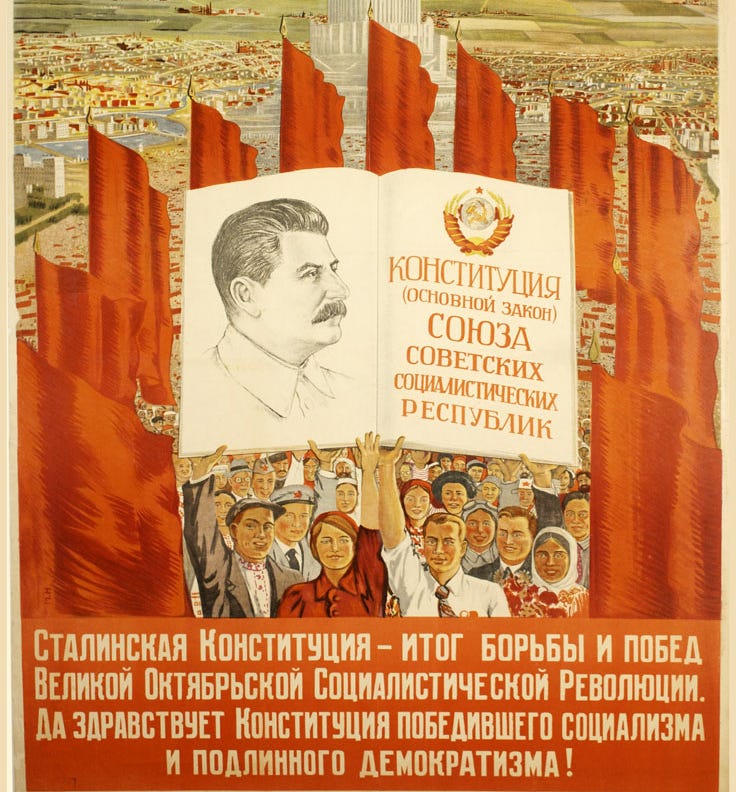
Interrogation
“As long ago as 1919 the chief method used by the interrogator was a revolver on the desk.” (Solzhenitsyn)
New prisoners were kept in small cells — often so narrow that they had no choice but to stand. Some were covered with bugs, without windows, without beds, and without ventilation. Others had their window glass smeared with red paint and equipped with a 15-watt light bulb that burned all day and night.
It could take very little to break a prisoner. After the fear and humiliation of arrest, mere solitude could provoke many into a confession.
“No one had addressed a human word to you. No one had looked at you with a human gaze. All they did was to peck at your brain and heart with iron beaks, and when you cried out or groaned, they laughed.” (Solzhenitsyn)
However, prison officials also had creative ways to interrogate those who remained difficult. Solzhenitsyn includes a whole list: darkness, foul language, psychological manipulation, humiliation, confusion, intimidation, lying, playing on one’s affections, sound effects, standing on one’s knees, sleep deprivation, water deprivation, bug-infested box, starvation, cold, and strait jackets.
Not to mention the beatings. Many of which employed medieval-like torture methods. There were also threats against one’s family.
What do you do, Solzhenitsyn asks,
“How can you stand your ground when you are weak and sensitive to pain, when people you love are still alive, when you are unprepared?”
Despite the incredible odds, there were prisoners — very few — who managed to resist interrogation methods. But this required a unique inner strength. “Only the man who has renounced everything can win that victory,” Solzhenitsyn explains.
Some prisoners would learn this strength during their time in the Gulag. Applebaum notes that unique aspects of the prison regime, such as interrogation, seemed “deliberately designed” to prepare inmates for camp life.
But the majority of prisoners trembled and signed the confession.
“Brother mine! Do not condemn those who, finding themselves in such a situation, turned out to be weak and confessed to more than they should have … Do not be the first to cast a stone at them.” (Solzhenitsyn)
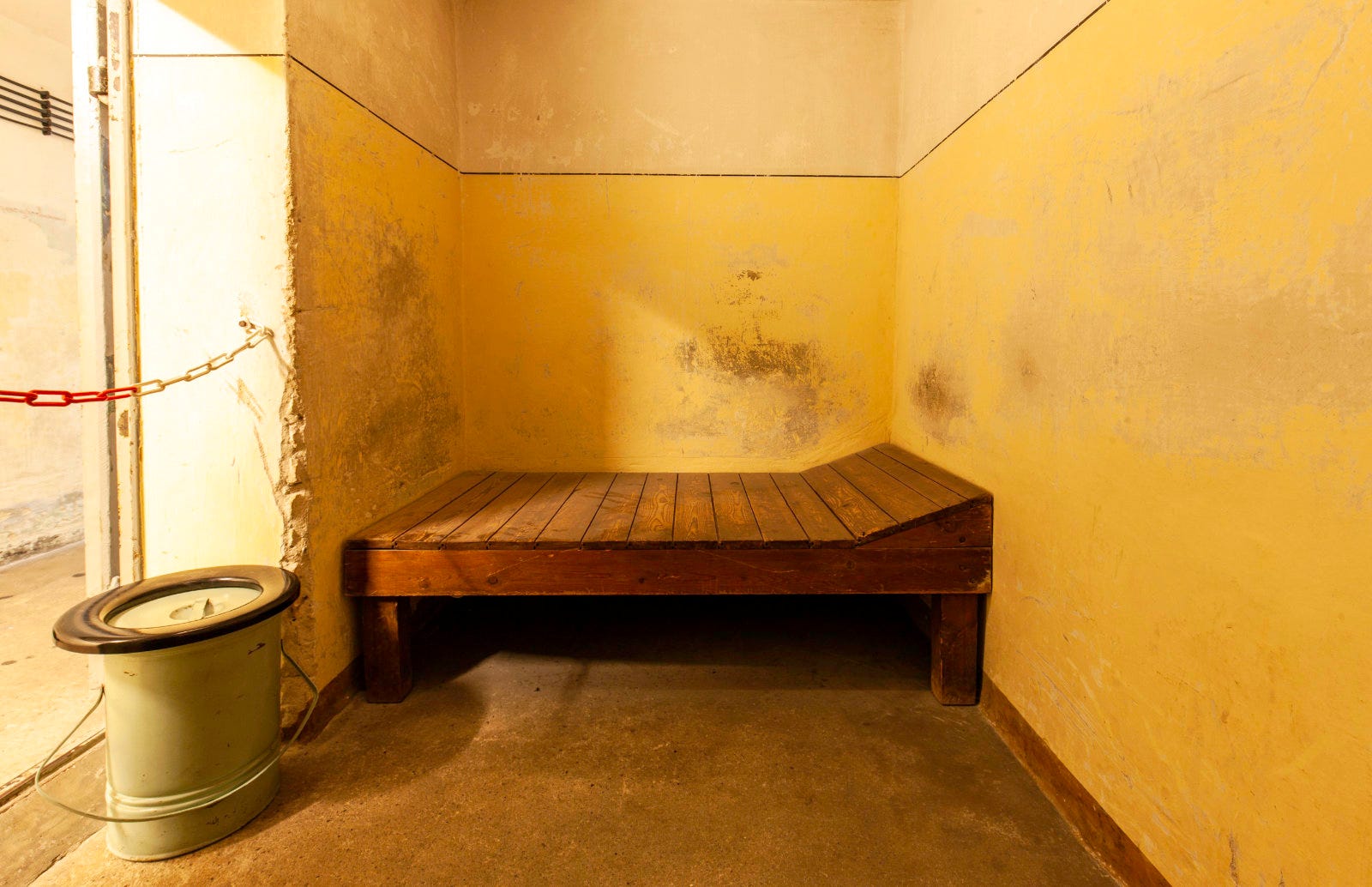
Life in the Cells
Prison conditions varied immensely. Typically, rural prisons were dirtier but more lenient. Moscow prisons were cleaner but more deadly.
Solitary confinement marked much of the early years of Soviet prisons, but as arrests reached their peak in the 1930s and 40s, overcrowding took over. The main Arkhangelsk prison, for example, had a maximum capacity of 740 and held in 1941 between 1,661 and 2,380 prisoners.2 Such overcrowding, Solzhenitsyn writes, caused “the prisoners to torture the prisoners.”
When Lavrenty Beria took over Gulag operations in 1942, he aimed to make the camps into efficient economic tools. As a result, new rules were imposed in prisons to ensure healthy inmates who were able to work upon arrival in the camps.
Despite this, everything seemed calculated to make one go insane.
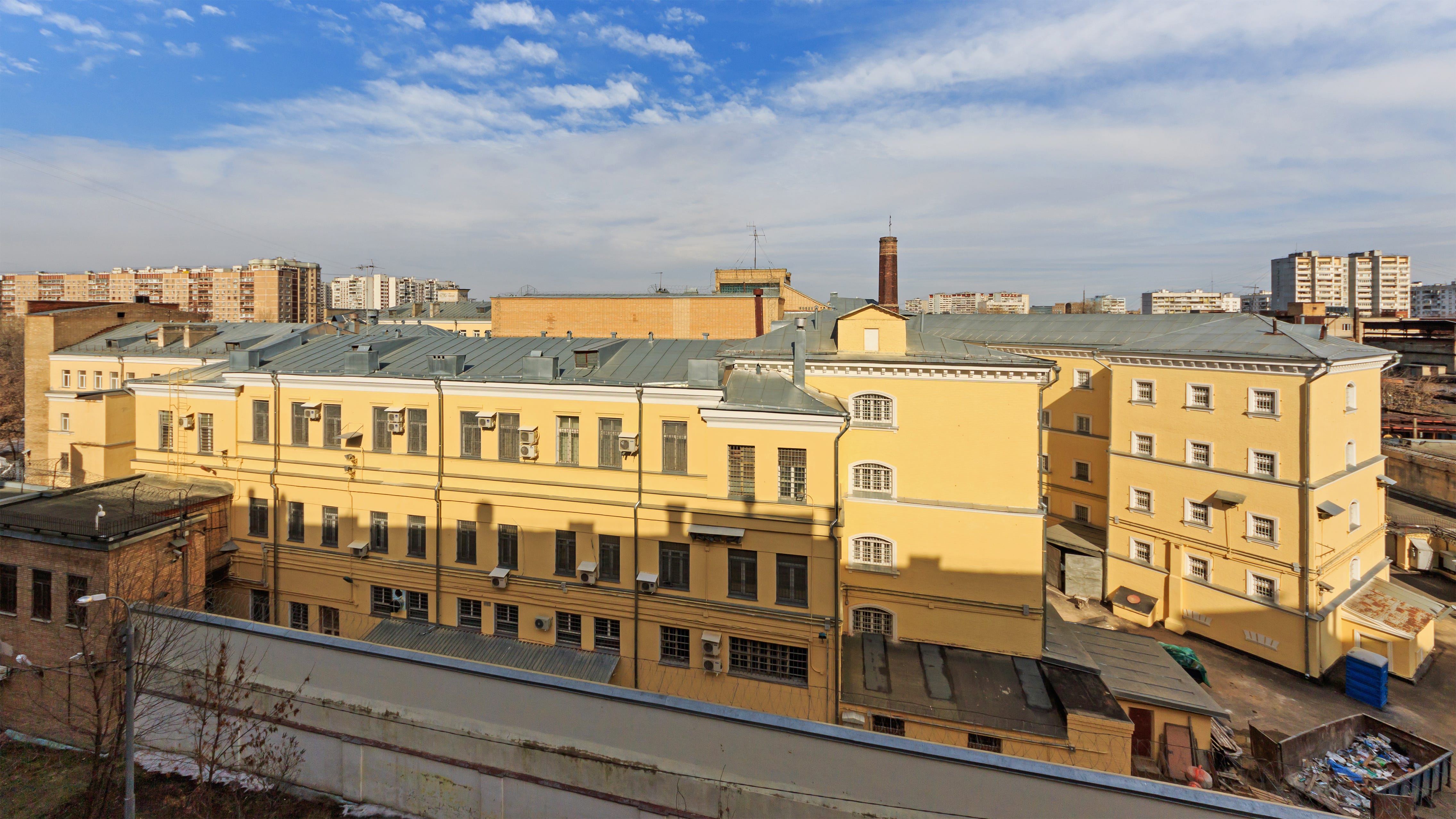
Prisoners were allowed outside for 20 minutes a day. There was constant surveillance, removing any sense of privacy. Forced sleeplessness was widely implemented to intimidate and interrogate prisoners; they were forbidden to sleep during the day and electric lights were kept on all night. A slop bucket, parasha, occupied the cell, used by all prisoners to relieve themselves — new inmates were forced to sleep next to it. There was also the risk of informers. Most prisoners expected, and acted as if, there was one informer in each cell.
Officials tried to prevent communication between prisoners in separate cells. In 1935, a new NKVD order forbade prisoners to talk, shout, sing, or write.
To combat this, prisoners used a kind of morse code, developed during the days of tsarist prisons. In one moving example, a man who learned the code and discovered that the man occupying the cell next to him was asking him “Who are you?” — he felt “a rush of pure love for a man who has been asking me for three months who I am.”3
Prisoners resorted to creative methods to maintain their sanity. One inmate kept in solitary confinement for 16 months devoted his time to washing his clothes, the floor, and the walls, while singing all the songs he could remember. Another, Alexander Dolgun, determined “not [to] allow them to drive him to madness or despair,” took measurements of his cell and “walked” to Moscow, across Europe, and home to the U.S.
Such stories seem to confirm Viktor Frankl’s observations from Holocaust camps — prisoners survived when they had a rich inner life they could retreat into. Solzhenitsyn provides one extraordinary example of this in Nikolai Aleksandrovich Kozyrev:
“[He] saved himself only by thinking of the eternal and infinite: of the order of the Universe – and of its Supreme Spirit; of the stars; of their internal state; and what Time and the passing of Time really are. And in this way he began to discover a new field in physics. And only in this way did he succeed in surviving in the Dmitrovsk Prison.”
Despite the lack of privacy and sanitation that came with overcrowding, many prisoners were grateful to be moved into cells and housed with others. Solzhenitsyn describes the moment of arrival into one’s first communal cell as “a very special one,” comparable to the emotion of your first love.
Now, he explains, you are no longer alone:
“‘We’ – Yes, that word which you may have despised out in freedom, when they used it as a substitute for your own individuality … is now revealed to you as something sweet: you are not alone in the world!”
The Line Between Good and Evil
Something must be said of those who watched over the prisoners.
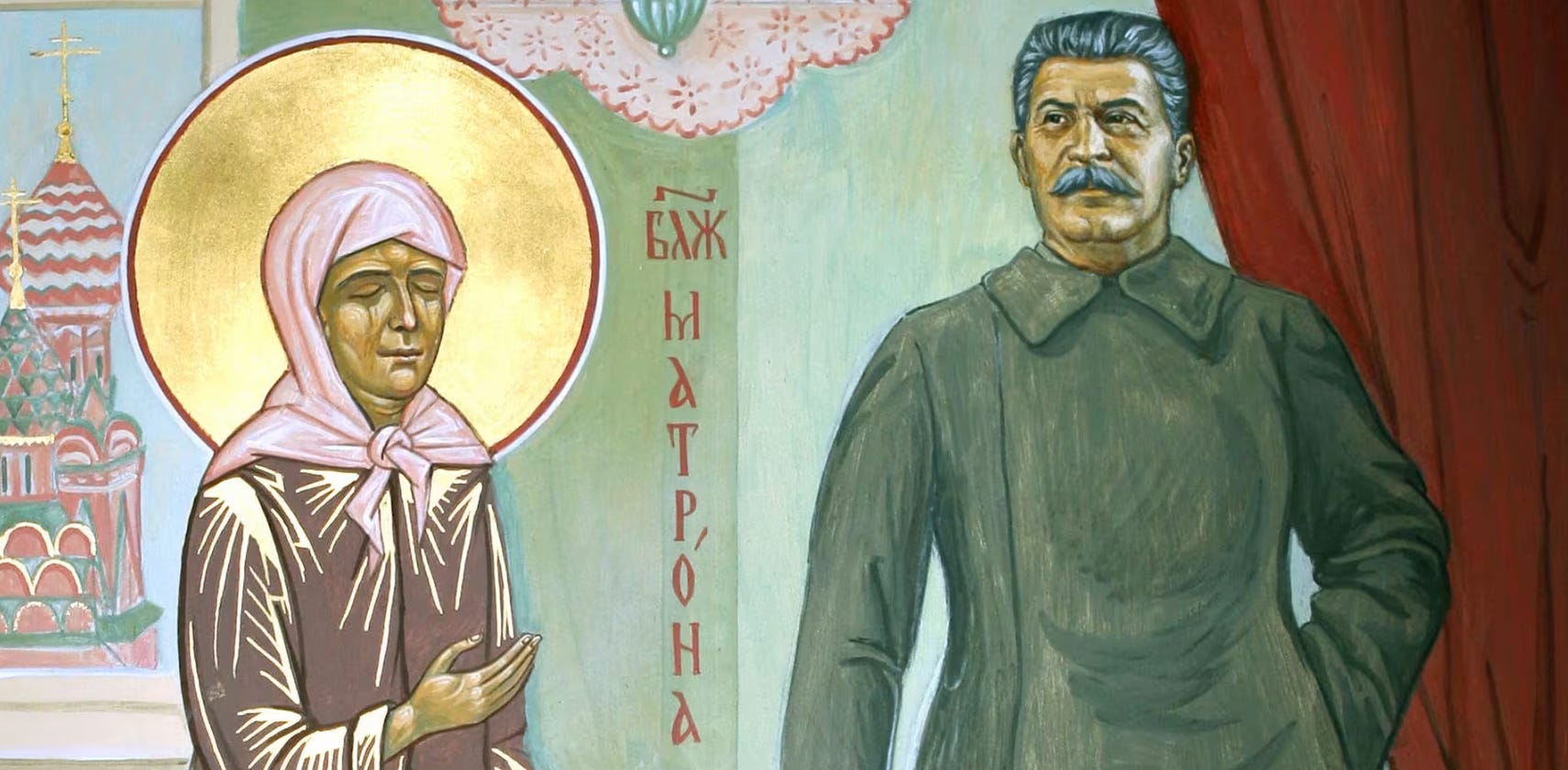
Solzhenitsyn points out that the government went through pains to ensure that there was never any written authorization of torture by Stalin — that is,“his hands were clean.”
For better or worse, prison guards had a large degree of control over the wellbeing of the inmates. For much of the early years, torture, though never formally authorized, was widely used and supported. Whether a prisoner was treated well or poorly depended on the discretion of the officer “investigating” their case.
These “bluecaps,” as Solzhenitsyn called them, were given immense privileges:
“To know what it meant to be a bluecap one had to experience it! Anything you saw was yours! Any apartment you looked at was yours! Any woman was yours! Any enemy was struck from your path! The earth beneath your feet was yours! The heaven above you was yours – it was, after all, like your cap, sky blue!”
If only you turned away, blinded yourself to the horrors around you, life could be made much better.
Although it would be easy to dismiss these men as monsters, Solzhenitsyn warns us not to be too harsh. Applebaum notes of some instances — not many — of guards showing kindness to prisoners. Moreover, in such difficult circumstances as that of life in the Soviet Union, who among us might not be tempted to join the bluecaps? “It is a dreadful question,” Solzhenitsyn writes, “if one really answers it honestly.”
It is during his description of prison that Solzhenitsyn writes arguably the most iconic line of The Gulag Archipelago.
As he reflects on the prison guards, those government officials tasked with conducting interrogation and producing false confessions, he concludes,
“But the line dividing good and evil cuts through the heart of every human being. And who is willing to destroy a piece of his own heart?”
As we move further into the Gulag, it is important to maintain a sense of grayness about those involved. Prisoners, guards, officials — they all had the capacity for both profound compassion and cruelty.
And when you’re thrust into the terrors of something like the Gulag, the line dividing the two becomes thinner and thinner.
*
An official enters your cell. He calls out a letter of the alphabet — never your name, only the first letter.
You rise up with a few fellow inmates and are informed of an upcoming transport.
“Well, brothers, a prisoner transport! A prisoner transport! We’re off to somewhere! Good Lord, bless us! Shall we gather up our bones?”
It’s nearing time to enter the Gulag. But first, you have to survive the journey.

This essay is part of a series on life in the Gulag. To read the next installment, Transport, subscribe to my substack!
Bibliography
Gulag: A History by Anne Applebaum
The Gulag Archipelago by Alexander Solzhenitsyn
Arrest quotas were issued by higher levels of government, and it would be up to local police units to round up citizens to fulfill these numbers. Because local units were pressured into securing high amounts of arrests, the legal code was self-consciously broad, making it easy to prosecute.
Applebaum, Gulag: A History.
Applebaum, Gulag: A History.